When timelines are tight and guests are hungry, event planning with food delivery turns chaos into calm. This complete guide shows Toronto planners how to design memorable experiences—without kitchen stress—by coordinating reliable catering, smart logistics, and guest-friendly menu choices that travel well and serve fast.
Quick Answer
For smooth event planning with food delivery in Toronto, lock delivery windows, match serving style to your agenda, and choose a menu that travels well. Shawarma Moose (898 College St) offers shawarma and Turkish cuisine for delivery, pickup, and full catering—ideal for corporate meetings, office lunches, and private parties.
Summary
- What you’ll learn: How to plan menus, time deliveries, set up serving stations, and handle dietary needs for 20–300+ guests.
- Why it matters: Food flow drives event energy; smart delivery and setup prevent lines, food waste, and stress.
- Who this helps: Office admins, event planners, community organizers, and team leads across Toronto, Mississauga, and Brampton.
- Quick win: Use a build-your-own shawarma bar to serve fast, satisfy diets (including halal and vegetarian), and keep portions consistent.
- Next step: Reserve your window and menu via our catering request page to lock logistics early.
Above the Fold: Plan the Experience (and Your TOC)
- What is event planning with food delivery? Coordinating menus, timing, staffing, and setup without onsite cooking.
- Why it matters: Predictable delivery beats last-minute scrambles; guests remember great food and smooth service.
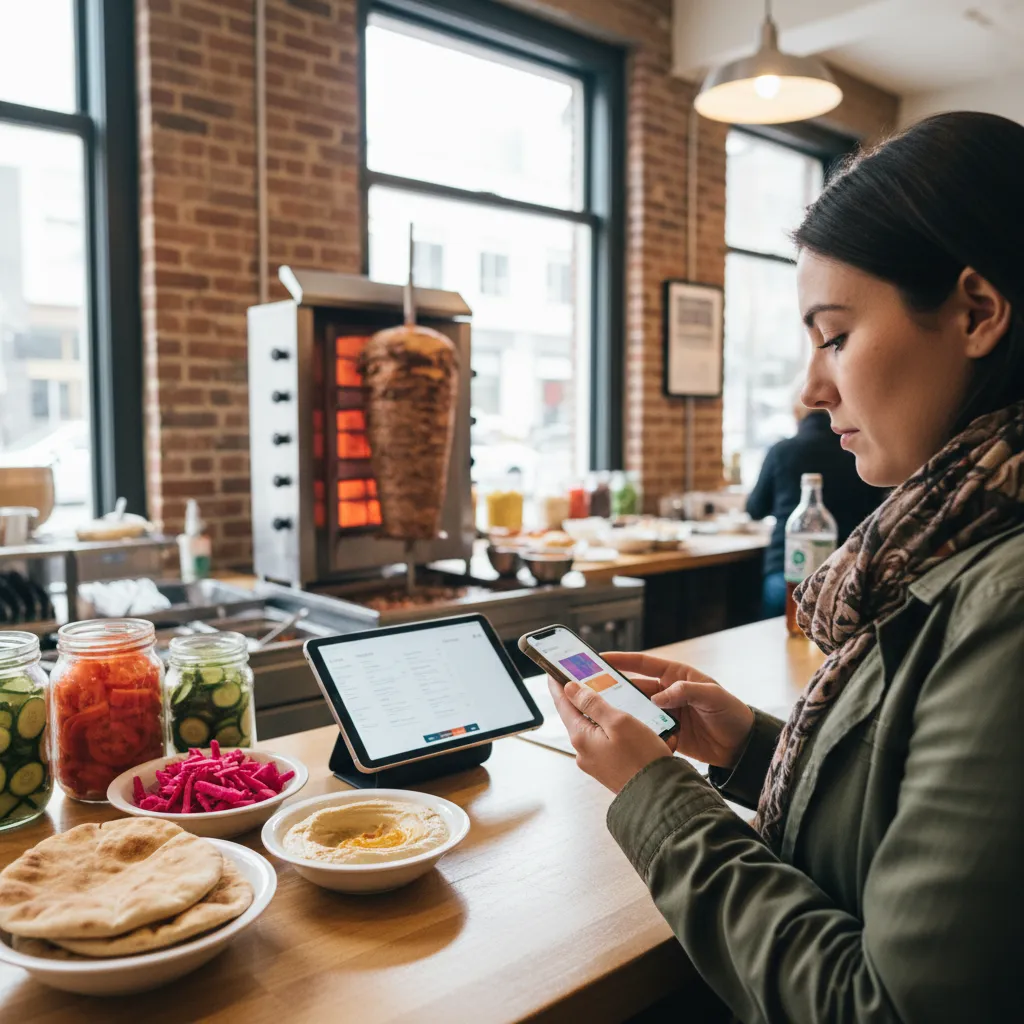
- How it works with Shawarma Moose: Order online for buffet-style office catering, delivery or pickup; add notes for entry, elevators, and timelines.
- What you’ll find below:
- Definitions and benefits
- Service styles (buffet, boxed, family-style, stations)
- Buying guide and comparison table
- Logistics playbook (routes, timing, setup)
- Tools, templates, and checklists
- Toronto case studies and FAQs
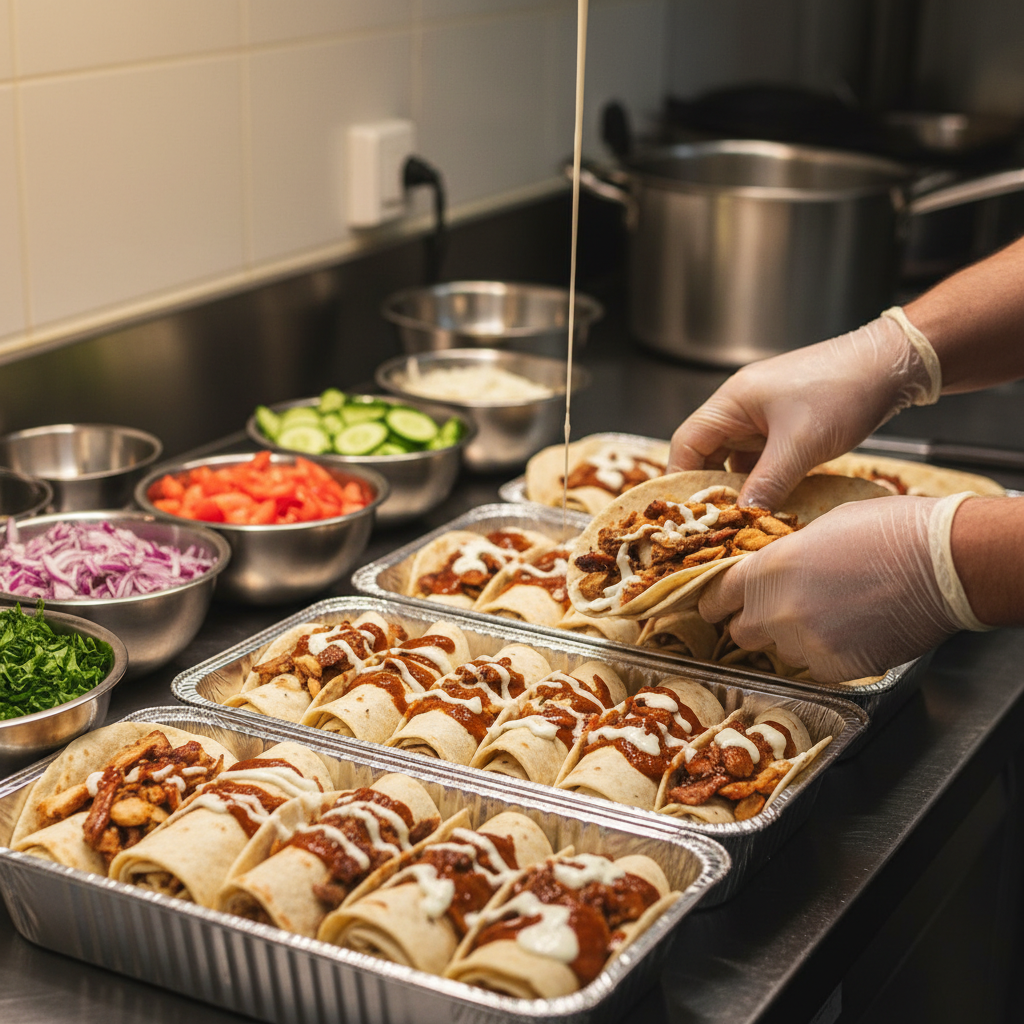
What Is Event Planning with Food Delivery?
It’s the process of designing an event menu and guest flow that can be delivered ready-to-serve (or quickly finished onsite) without bringing in a full kitchen. The goal: reliable timing, easy setup, and consistent portions.
- Core elements:
- Menu design: Dishes that travel well (shawarma, rice, salads, meze) and reheat quickly if needed.
- Service style: Buffet, boxed meals, family-style platters, or build-your-own stations.
- Logistics plan: Delivery windows, building access, elevators, loading, and setup surfaces.
- Dietary coverage: Halal-friendly proteins, vegetarian and vegan options, and gluten-aware sides.
- Where Shawarma Moose fits:
- Everyday orders: Online food delivery and pickup for teams who need lunch now.
- Catering: Coordinated drop-off with labeled trays, chafer-ready pans, and clear setup notes.
- Authenticity: Turkish flavors with Toronto-friendly variety—shawarma, rice, salads, and meze.
Here’s the thing: when food arrives on time and in the right format, you control the room’s energy. That’s the heart of great event planning with food delivery.
Why Event Planning with Food Delivery Matters
- Time is your scarcest asset: Delivery eliminates onsite cooking and reduces variables.
- Predictability beats improvisation: Set windows, portion planning, and sturdy packaging prevent chaos.
- Guest experience: Fast service keeps sessions on schedule and people engaged.
- Dietary trust: Clear labels and inclusive options build confidence for mixed teams.
- 2026 trend: Hybrid events favor grab-and-go and build-your-own—minimal lines, maximum choice.
Example: A Bay Street client pitch needs 40 boxed meals, each with a halal protein, vegetarian alternative, and nut-free labeling. With a single delivery drop, your team starts on time—and the meeting stays focused.
How Event Food Delivery Works (End-to-End)
- 1) Define the agenda: Map eat-times to your run-of-show (e.g., networking 5:00–5:30, dinner 5:30–6:00).
- 2) Choose a serving style: Buffet for speed, boxed for control, family-style for shared tables, stations for interaction.
- 3) Lock the window: Select a 20–30 minute arrival window with a short buffer for setup.
- 4) Share access notes: Dock, elevator, suite number, and a phone contact for security.
- 5) Stage the room: Tables, traffic flow, signage (arrows), waste and compost bins.
- 6) Unpack and label: Place proteins, sides, sauces, and dietary signage in one pass.
- 7) Service and replenish: Keep hot items covered between waves; refresh salads at halfway.
- 8) Wrap and donate: Seal leftovers and note food-safe windows for staff to take home.
For corporate teams near College Street or the University of Toronto, delivery plus quick staging is often faster than trying to shepherd a group to restaurants at peak hours.
Types of Service Styles (and When to Use Each)
Match the format to your room, agenda, and guest mix. The right choice keeps traffic moving and plates balanced.
Buffet (Drop-Off Catering)
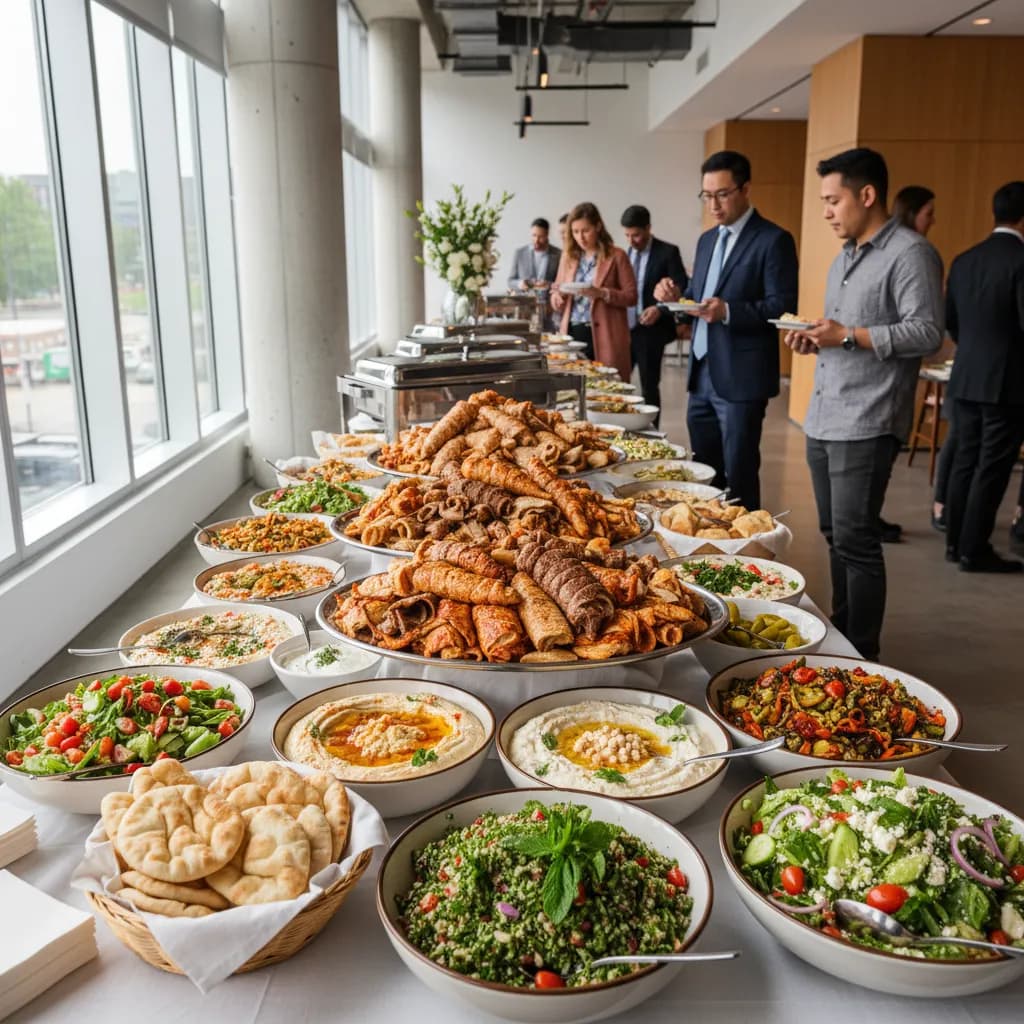
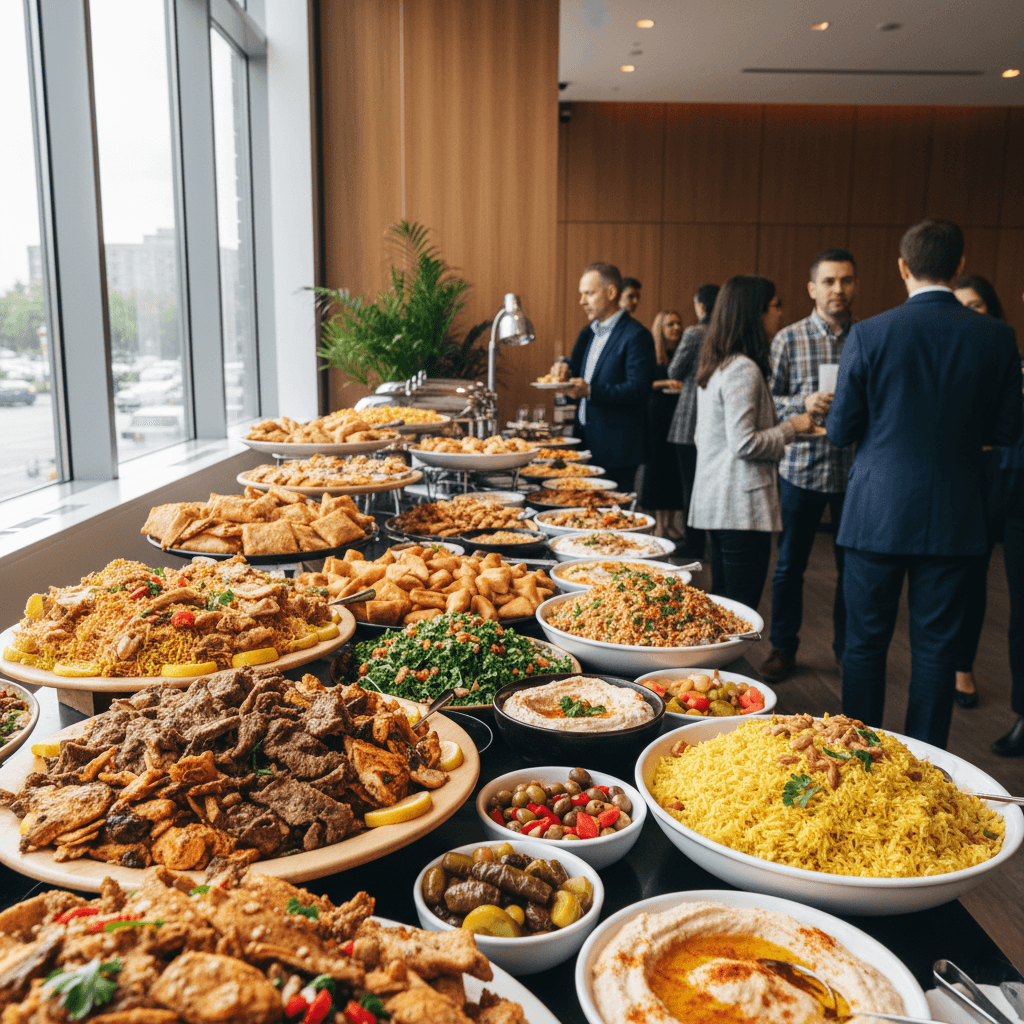
- Best for: 25–250 guests, staggered arrivals, and short meal breaks.
- Pros: Fast service, flexible portions, easy to add vegetarian/vegan lanes.
- Consider: Needs tables and flow arrows; assign one helper per 40 guests to guide lines.
- Shawarma Moose example: Proteins (chicken, beef), rice, mixed greens, fattoush, hummus, sauces, and warm pitas.
Boxed Meals
- Best for: Training days, boardrooms, buses, and outdoor activations.
- Pros: Portion control, easy distribution, minimal cleanup.
- Consider: Less customization; collect dietary info in advance.
- Shawarma Moose example: Shawarma wrap, salad, and cookie/fruit, with halal and vegetarian variants.
Family-Style Platters
- Best for: Tables of 6–10, retreats, and team dinners.
- Pros: Social, beautiful presentation, natural portion sharing.
- Consider: Requires table space; keep hot lids on between helpings.
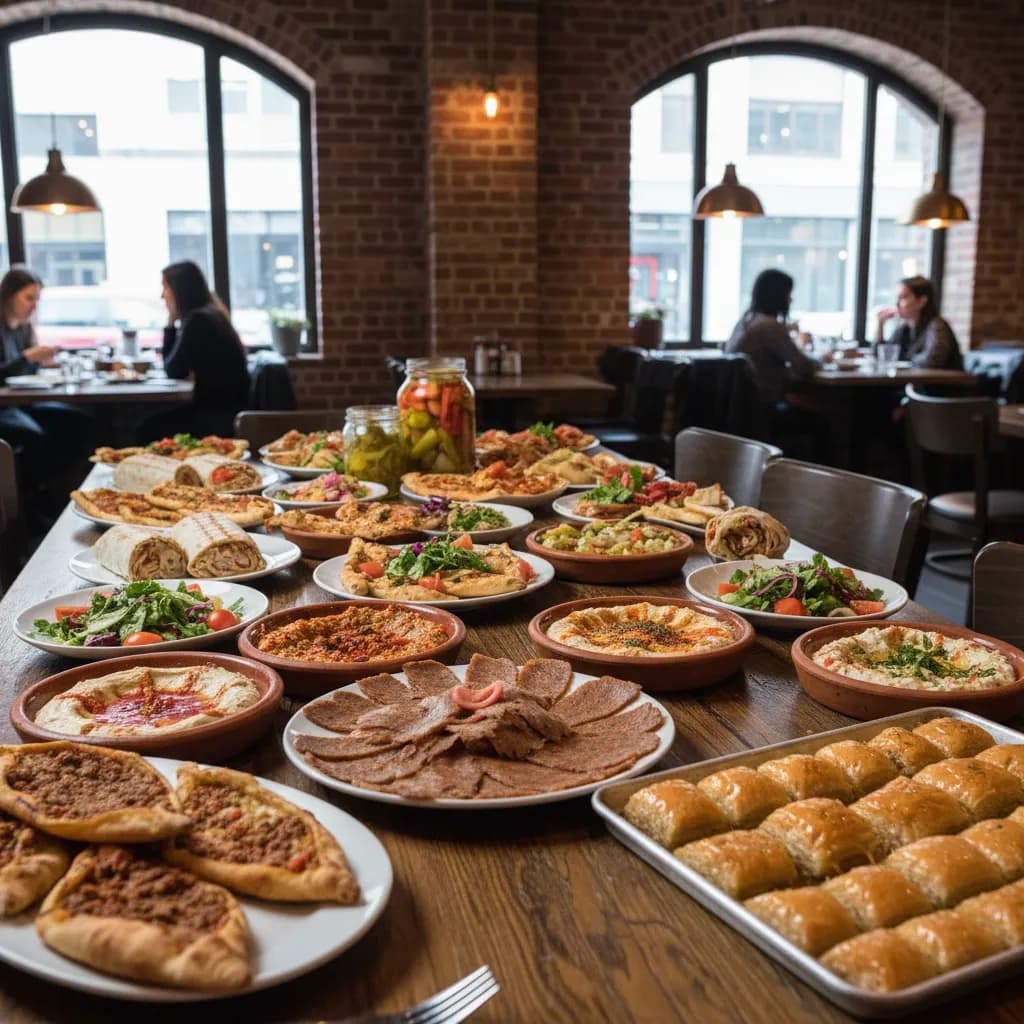
- Shawarma Moose example: Mixed shawarma platter, rice pilaf, salad bowls, assorted meze.
Build-Your-Own Stations
- Best for: Mix-and-mingle events where guests customize plates.
- Pros: High satisfaction; easy for halal, vegetarian, and gluten-aware choices.
- Consider: Needs a dedicated table per station; place sauces at the end to speed the line.
- Shawarma Moose example: DIY shawarma bar with proteins, toppings, and sauces for fast, fun assembly.
Comparison Table: Which Service Style Fits Your Event?
| Service Style | Ideal For | Pros | Considerations | Setup Time |
|---|---|---|---|---|
| Buffet | 25–250 guests; short breaks | Fast, flexible, inclusive | Needs tables and flow | 20–30 minutes |
| Boxed Meals | Boardrooms; trainings | Portion control; no lines | Lower customization | 10–15 minutes |
| Family-Style | Team dinners; retreats | Social; attractive | Table space required | 15–25 minutes |
| Build-Your-Own | Mixers; multi-diet groups | Highly customizable | More table footprint | 25–35 minutes |
Buying Guide: How to Choose a Food Delivery Partner
Here’s a step-by-step vetting framework you can use today.
Menu Fit and Dietary Coverage
- Check travel-ability: Ask how items hold temperature and texture over 20–45 minutes.
- Confirm inclusive options: Halal proteins, vegetarian and vegan mains, gluten-aware sides, and nut-avoidance paths.
- Look for modularity: Proteins + sides + toppings make build-your-own stations painless.
- Try a pilot order: Do a small-team lunch before your larger event.
Operational Reliability
- Delivery windows: Providers should offer defined arrival windows with buffer time.
- Communication: Clear driver contact, live updates, and a single point of contact.
- Labeling and organization: Trays labeled by item and diet to speed setup.
- Contingency plan: Backup hot-hold or reheating plan if traffic delays occur.
Local Knowledge (Toronto)
- Routes and timing: Know the College St corridor, Spadina congestion, and Gardiner traffic.
- Building access: Experience with loading docks, security desks, and elevator bookings.
- Weather moves: Cold snaps and summer heat need insulated carriers and smart staging.
Shawarma Moose checks these boxes with authentic Turkish flavors and an online-first ordering flow. Explore formats on our buffet-style office catering page or send details via our catering request.
Logistics Playbook: Timing, Routes, and Room Setup
Strong logistics make average food feel great—and great food feel unforgettable.
Timing
- Work backward: If service starts at 12:00, target 11:30–11:45 arrival; allow 15–25 minutes for setup.
- Stagger breaks: For 150+ guests, create two service waves to reduce lines.
- Heat management: Keep lids on; sauce at the end; refresh greens halfway.
Routes and Access
- Share exact instructions: Dock codes, suite numbers, and a reachable onsite lead.
- Elevators: Reserve if possible; otherwise, plan a 10-minute cushion for slow cars.
- Winter buffer: Add 10 extra minutes between December and March for boots, coats, and slush mats.
Room Setup
- Flow design: Start with plates and proteins; place sauces at the end to move the line.
- Signage without clutter: Use simple arrows; label vegetarian and halal clearly.
- Waste stations: Place landfill, recycling, and compost bins near exits—not next to the buffet.
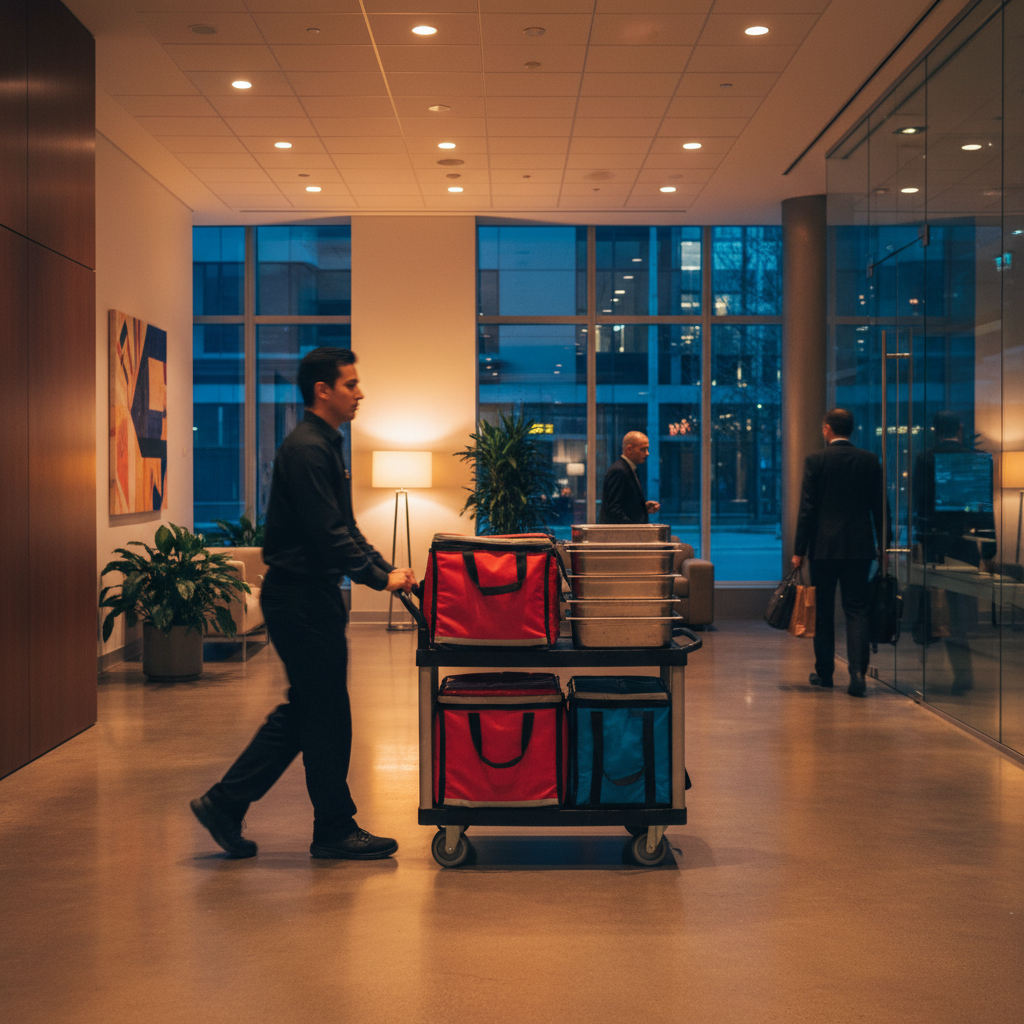
Local Tips
- Tip 1: For venues near College & Ossington or U of T, note the closest loading zone and which entrance bypasses stairs—drivers save crucial minutes.
- Tip 2: Winter in Toronto slows elevators and street traffic; add a 10–15 minute buffer and stage coats away from the buffet line.
- Tip 3: Downtown offices along Spadina and the PATH see lunchtime surges; schedule delivery slightly before noon to beat lineups and secure carts.
IMPORTANT: These moves keep your service smooth and your agenda on time.
Menu Playbooks (13 Proven Combinations That Travel Well)
These combinations balance variety, diet coverage, and speed. Mix and match to fit your headcount and agenda.
- Shawarma Buffet Classic: Chicken + beef shawarma, rice, mixed greens, fattoush, hummus, garlic sauce, tahini, pitas.
- Halal + Veg Harmony: Halal chicken, falafel, tabbouleh, roasted veggies, tahini, spicy sauce.
- Boxed Wrap Set: Shawarma wrap, side salad, seasonal fruit—labels for vegetarian and halal.
- Team Dinner Family-Style: Mixed shawarma platter, rice pilaf, shepherd’s salad, assorted meze.
- Build-Your-Own Bar: Proteins + toppings + sauces; keep sauces at the end to speed flow.
- Gluten-Aware Spread: Rice bowls with proteins, salads, and naturally gluten-aware dressings.
- Light Networking Bites: Mini wraps, crudités, olives, and dips for stand-up mixers.
- Afternoon Recharge: Rice bowls and salads; add a sweet bite with fruit or cookies.
- Speaker Green Room: Boxed wraps, side salads, and individual water—quiet, tidy, quick.
- Outdoor Activation: Boxed meals with wet wipes and compostable cutlery.
- Holiday Social: Warmer trays, extra napkins, and a hot tea/coffee station.
- Late Shift Warehouse: Protein-forward platters, rice, hearty salads—easy to grab in waves.
- Client Pitch Polish: Individually labeled boxes, neutral aromas, and tidy sauces.
Want Mediterranean inspiration? See menu ideas in this quick primer on Mediterranean catering services for flavor pairings and platter balance.
Best Practices (That Planners Actually Use)
Plan for Lines You’ll Never See
- Two identical lanes: Mirror your buffet left and right for 100+ guests.
- Two-tap sauce strategy: Split sauces into two sets at the end of the line.
- Runner role: Assign one person to replenish proteins and pitas only.
Label Like a Pro
- Big categories first: Protein, vegetarian, vegan; then allergens (nuts, dairy) and halal.
- Color coding: Use a simple color cue at the tray level to keep service moving.
- Menu map: A one-pager at the front of the line reduces questions by 80%.
Protect Temperature and Texture
- Keep lids on between waves: Opens only when guests reach that station.
- Dress greens at the line: Toss salads in small batches to prevent sog.
- Stack timing: Proteins last; starches first—guests feel served faster.
Tools and Resources (Planner Toolkit)
- Run-of-show template: 5-minute blocks for doors, welcome, announcements, service, and transitions.
- Dietary tracker: Sheet with counts for halal, vegetarian, vegan, and gluten-aware.
- Room diagrammer: Sketch entrance, buffet lanes, beverage station, and waste bins.
- Delivery brief: Building access notes, elevator availability, cart needs, onsite contact.
- Cleanup plan: Compost, recycling, and leftovers labeled with time windows.
We’ve baked these into our catering coordination. When you submit details via the catering request form, we align staffing, equipment, and labeling to your plan.
Need a sanity check on your agenda? Share your headcount, room layout, and delivery window—our team at 898 College St will suggest the fastest service style for your flow.
Case Studies: Real Toronto Scenarios
1) Downtown Tech Meetup near U of T (120 guests)
- Goal: Feed quickly between sessions without long lines.
- Plan: Two mirrored shawarma buffet lanes, sauces at the end, compost bins at exits.
- Outcome: 12 minutes to serve first 80 guests; vegetarian line moved just as fast.
2) Mississauga Client Briefing (40 boxed meals)
- Goal: Tidy, labeled meals for a boardroom with mixed diets.
- Plan: Labeled boxes (halal, vegetarian), neutral sauces, fruit sides.
- Outcome: Distribution in under 5 minutes; meeting started on schedule.
3) Brampton Warehouse Lunch (180 guests, staggered breaks)
- Goal: Feed in three waves with minimal downtime.
- Plan: Buffet with heavy proteins, rice, and salads; lids kept on between waves.
- Outcome: All teams fed in 45 minutes; supervisors reported steady return to shifts.
For more corporate tips, explore our internal guide on impressing clients fast with timing, labeling, and portion planning.
Risk Management: Common Pitfalls (and Fixes)
- Late arrival risk: Book earlier windows; add building access details; keep a 10-minute buffer.
- Line bottlenecks: Mirror lanes; sauces at the end; second beverage station across the room.
- Diet confusion: Pre-collect restrictions; label trays; provide a menu map.
- Leftovers waste: Provide take-home containers and note food-safe time windows.
- Room mess: Extra napkins, wipes, and lined bins staged away from exits.
How to Place and Manage Your Order
Use this quick process to turn plans into plates.
- Outline the agenda: Start time, break windows, headcount, and guest mix.
- Pick your format: Buffet, boxed, family-style, or build-your-own.
- Confirm dietary needs: Halal, vegetarian, vegan, gluten-aware.
- Reserve your window: Submit details on our catering request page.
- Share access notes: Loading, elevator, suite, and onsite contact.
- Stage tables and signs: Flow arrows, two lanes, sauces at the end.
- Assign roles: Line guide, replenisher, cleanup lead.
Prefer to handle pickup yourself? We coordinate timing so food is hot and packaged for the ride—perfect for short hops across downtown.
Trends to Watch in 2026
- Station-first formats: Guests expect customization without long waits.
- Diet-first menus: Inclusive as default—halal, vegetarian, and gluten-aware front and center.
- Packaging sustainability: More compostable and recyclable materials at scale.
- Frictionless ordering: Online-first requests with clear arrival windows and driver updates.
These trends align with our service model—authentic flavors, fast setup, and reliable delivery from our College St location.
FAQ
- How do I decide between buffet and boxed meals?
Choose boxed for tight boardrooms or when you need seat-by-seat control. Pick buffet for 25+ guests and short breaks—it’s faster and easier to customize at the line. - What dietary options can you cover?
We routinely support halal proteins, vegetarian mains, vegan-friendly sides, and gluten-aware selections. Tell us your counts and we’ll label clearly. - How early should I book delivery?
As soon as you have a headcount window and agenda—earlier windows improve setup and reduce risk from traffic or elevator delays. - Can you handle multi-floor or secured buildings?
Yes. Share dock access, security desk info, and elevator notes. We plan carts and timing accordingly. - Do you offer pickup for events?
Absolutely. We’ll package for travel and align timing to your itinerary—ideal for nearby venues and campuses.
Key Takeaways
- Plan the flow first: Service style follows your agenda and room layout.
- Lock delivery details: Window, access, and contact keep everything on time.
- Serve fast, label clearly: Mirror lines and simple labels eliminate bottlenecks.
- Choose menus that travel: Shawarma, rice, salads, and meze hold texture and heat.
Related Articles
- Corporate catering timing checklist for downtown offices
- Build-your-own bar setups that reduce lines
- Inclusive menu planning for mixed-diet teams
Ready to plan? Tell us your headcount, room, and run-of-show—we’ll suggest the fastest way to feed everyone well. Start here: Shawarma Moose catering.
Planning a larger rollout across multiple offices? Our team at 898 College St can help standardize menus and delivery windows for consistency across Toronto, Mississauga, and Brampton.